
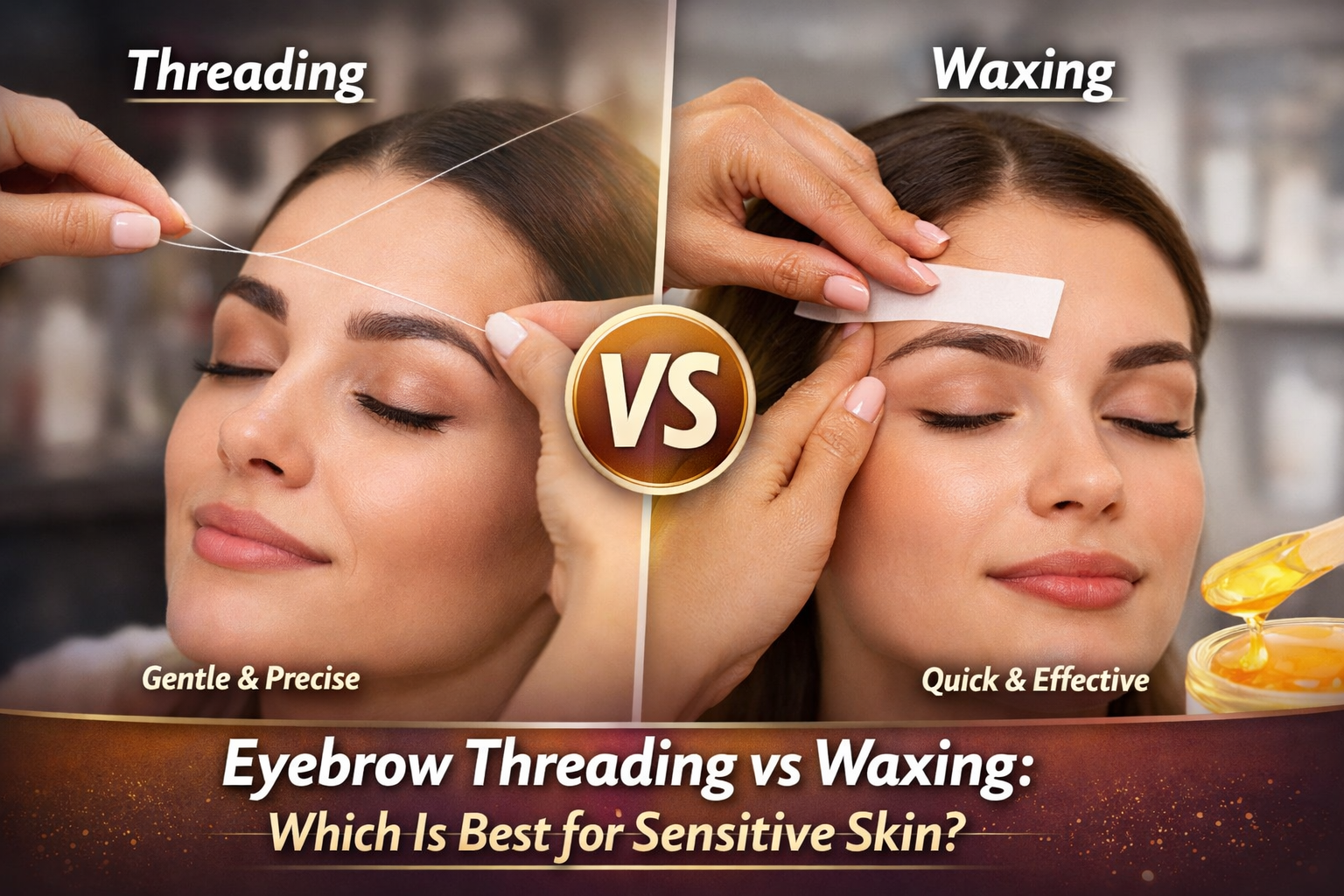
Eyebrow Threading vs Waxing: Best Option for Sensitive Skin
There’s a surprising fact about eyebrow grooming that many people don’t realize: the skin around your eyebrows is one of the thinnest and most delicate areas on your face. Because of that, even small beauty treatments can sometimes lead to redness, irritation, or breakouts. That’s why the debate around Eyebrow Threading vs Waxing has become so common—especially for people with sensitive skin.
If you’ve ever left a salon with slightly red brows (or worse, tiny bumps that appeared a few hours later), you’re not alone. I remember the first time I tried eyebrow waxing in college. The results looked great at first, but the redness lingered longer than expected. A friend later suggested threading, and that experience felt completely different. That’s when I realized the method you choose really does matter.
Today, many beauty professionals recommend threading for sensitive skin, while others still swear by waxing. So which one is truly better? Let’s break it down and explore Eyebrow Threading vs Waxing in detail so you can decide what works best for your skin.
Understanding Eyebrow Hair Removal Methods
Before comparing them, it helps to understand how each method works.
What Is Eyebrow Threading?
Threading is an ancient hair removal technique that originated in South Asia and the Middle East centuries ago. It uses a thin cotton thread that is twisted and rolled across the skin to remove unwanted hair from the follicle.
A skilled technician controls the thread to precisely pull individual hairs or small rows of hair.
Key characteristics of threading:
-
No chemicals involved
-
Extremely precise shaping
-
Removes hair directly from the root
-
Works well for small areas like eyebrows
Threading has grown in popularity in the United States because it’s gentle and allows for detailed brow shaping.
For example, salons like Chloe Beauty & Brows specialize in eyebrow threading and customized brow shaping for clients who want precise results without harsh treatments.
What Is Eyebrow Waxing?
Waxing is another popular hair removal technique that uses warm wax applied to the skin. A strip or cloth is placed on top, and the wax is quickly pulled off, removing the hair from the root.
Waxing is commonly used on larger body areas like legs and arms, but it’s also used for eyebrows.
Key characteristics of waxing:
-
Uses warm wax and strips
-
Removes multiple hairs at once
-
Quick treatment time
-
May cause temporary redness
Both methods remove hair from the root, but the way they interact with the skin is quite different. That difference becomes especially important when discussing Eyebrow Threading vs Waxing for sensitive skin.
Why Sensitive Skin Needs Special Care
Sensitive skin reacts more easily to irritation, heat, and chemicals. The eyebrow area already has thin skin, so treatments can sometimes cause:
-
Redness
-
Small bumps
-
Skin lifting
-
Breakouts
-
Burning sensation
People with the following skin types should be especially cautious:
-
Acne-prone skin
-
Rosacea
-
Very dry skin
-
Skin treated with retinoids
For these individuals, choosing the right hair removal method is not just about beauty—it’s about protecting the skin barrier.
Eyebrow Threading vs Waxing: Key Differences
To better understand Eyebrow Threading vs Waxing, let’s look at the core differences side by side.
| Feature | Threading | Waxing |
|---|---|---|
| Skin Contact | Minimal | Direct contact with wax |
| Chemicals | None | Wax ingredients may irritate |
| Precision | Very high | Moderate |
| Pain Level | Mild to moderate | Moderate |
| Redness Risk | Lower | Higher for sensitive skin |
| Best For | Sensitive skin, precise shaping | Quick hair removal |
This simple comparison explains why threading is often recommended for delicate skin.
Benefits of Eyebrow Threading for Sensitive Skin
Threading has gained popularity for good reason. Many people with reactive skin prefer it because the process doesn’t involve heat or chemicals.
Here are some advantages.
1. No Chemicals or Heat
Threading uses only cotton thread. That means no wax, no fragrances, and no heated products touching your skin.
For sensitive skin, this can significantly reduce irritation.
2. More Precise Brow Shape
Threading removes hair individually or in small rows. That allows technicians to sculpt brows more accurately.
If you’ve ever struggled with uneven brows, threading can be a game changer.
3. Less Skin Pulling
Waxing pulls the skin along with the hair. Threading only grabs the hair.
This difference makes threading feel gentler for many clients.
4. Ideal for Acne-Prone Skin
Wax can sometimes aggravate breakouts or spread bacteria across the skin. Threading avoids that problem because it doesn’t coat the skin.
Benefits of Eyebrow Waxing
Even though threading is popular, waxing still has its place in brow grooming.
1. Faster Process
Waxing can remove many hairs in one quick motion.
For people in a hurry, waxing might take slightly less time.
2. Smooth Finish
Waxing removes very fine hairs (often called peach fuzz), leaving skin feeling smooth.
3. Works Well for Thick Hair Growth
If someone has extremely dense eyebrow hair, waxing may remove large sections faster.
Potential Risks of Each Method
Every beauty treatment has potential downsides.
Threading Risks
-
Slight discomfort during treatment
-
Temporary redness
-
Requires a skilled technician
However, these effects are usually mild and fade quickly.
Waxing Risks
Waxing can sometimes cause stronger reactions, especially for sensitive skin.
Possible side effects include:
-
Skin lifting
-
Redness lasting several hours
-
Irritation from wax ingredients
-
Breakouts
People using retinol or acne medication should avoid waxing completely because the skin may tear.
My Personal Experience with Threading vs Waxing
I’ve tried both methods over the years, and honestly, my experience mirrors what many dermatologists say.
When I used waxing, my brows looked sharp—but the redness stuck around for hours. One time, I even had tiny bumps the next morning.
Threading felt different. The sensation was a little unusual at first (almost like a quick pinching feeling), but my skin calmed down much faster afterward.
That’s why many clients who visit Chloe Beauty & Brows choose threading. The technique allows for personalized brow shaping while being gentle on sensitive skin.
How to Prepare for an Eyebrow Appointment
Regardless of the method you choose, preparation helps reduce irritation.
Before Your Appointment
-
Avoid exfoliating for 24 hours
-
Skip retinol products
-
Arrive with clean skin
-
Let your brow hair grow slightly
Aftercare Tips
After threading or waxing, follow these simple steps.
-
Apply aloe vera or soothing gel
-
Avoid touching the area
-
Stay out of direct sunlight for a few hours
-
Skip makeup on the brows for the day
Proper aftercare makes a big difference in how your skin responds.
When to Choose Threading Over Waxing
Threading may be the better option if:
-
You have sensitive skin
-
You use acne medication
-
You want extremely precise brows
-
You experience redness after waxing
In the ongoing discussion of Eyebrow Threading vs Waxing, these factors often push people toward threading.
When Waxing Might Be Better
Waxing could work well if:
-
Your skin tolerates wax easily
-
You want a quick appointment
-
You prefer ultra-smooth skin around the brows
Still, many professionals recommend threading first for people unsure how their skin will react.
Professional Brow Services Matter
One important point people often overlook is technique.
A poorly done threading or waxing service can cause irritation regardless of the method. That’s why choosing an experienced salon is crucial.
Professionals at Chloe Beauty & Brows offer services such as:
-
Eyebrow Threading
-
Eyebrow Tint
-
Eyelash Extensions
-
Microblading
-
Facials
-
Waxing
-
Henna Tattoos
-
Personalized Brow Shaping
-
Skincare Treatments
Their trained technicians tailor brow shaping based on face shape, hair growth, and skin sensitivity.
Final Thoughts
The debate around Eyebrow Threading vs Waxing often comes down to skin type and personal preference. Both techniques can create beautiful brows, but sensitive skin tends to respond better to threading because it avoids heat and chemicals.
If you’ve struggled with redness, irritation, or breakouts after waxing, threading might be worth trying. Many people who switch never go back.
At the end of the day, the goal is simple: healthy skin and beautifully shaped brows that enhance your natural features.
Frequently Asked Questions (FAQs)
1. Is threading less painful than waxing?
Pain levels vary, but many people find threading slightly more comfortable because it doesn’t pull the skin like waxing does.
2. How long do threading results last?
Results typically last 3–4 weeks depending on hair growth.
3. Can sensitive skin handle eyebrow waxing?
Some people with sensitive skin can tolerate waxing, but irritation is more common compared to threading.
4. Does threading cause ingrown hairs?
Threading rarely causes ingrown hairs because it removes hair cleanly from the follicle.
5. How do I choose between eyebrow threading vs waxing?
Consider your skin sensitivity, pain tolerance, and desired brow shape. Many people with delicate skin prefer threading for its gentler approach.