
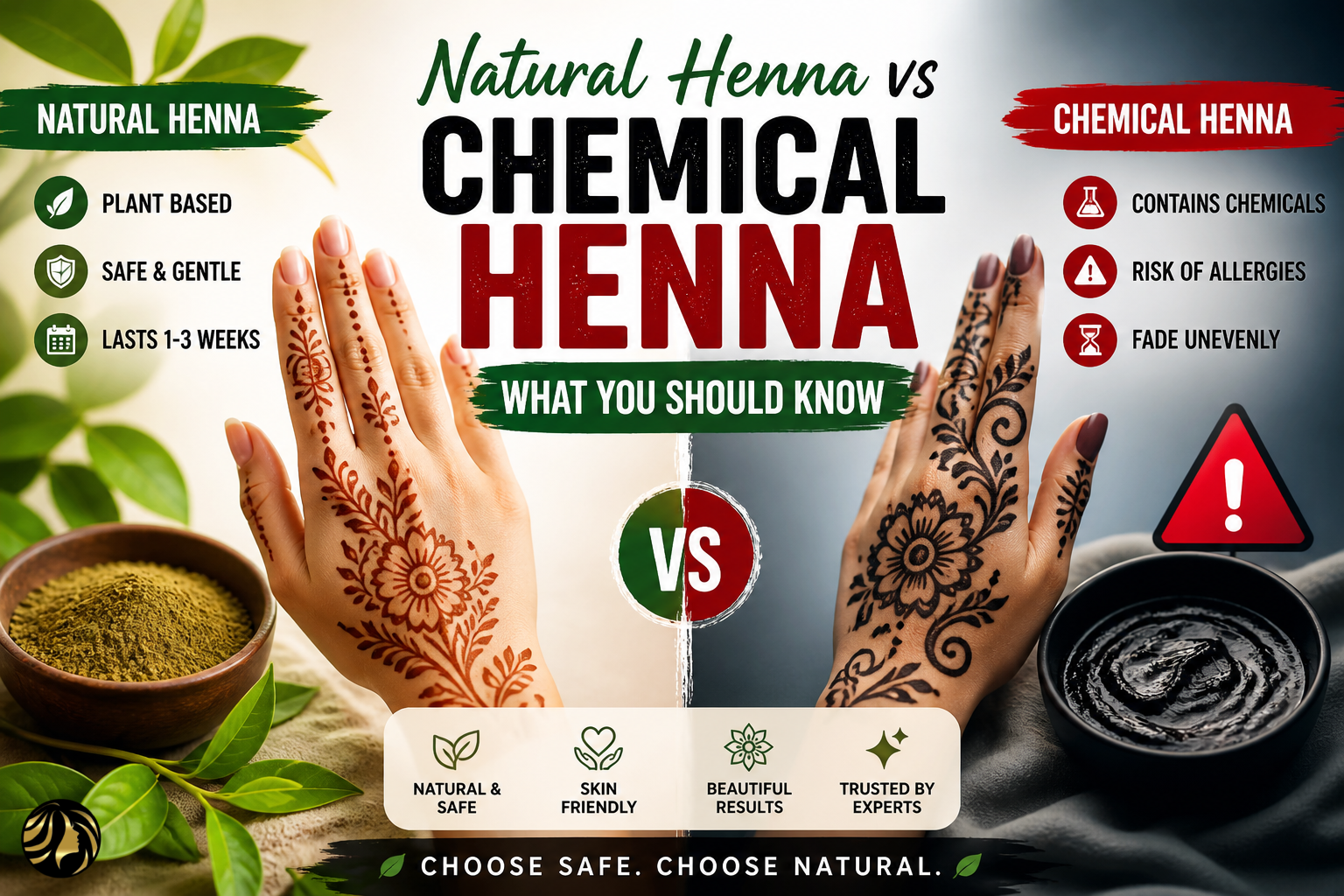
Natural Henna vs Chemical Henna: What You Should Know
Henna has been used for thousands of years across cultures—from weddings in India to traditional body art in the Middle East. Interestingly, many people still don’t realize that not all henna is created equal. If you’ve ever wondered why one henna stain looks rich and earthy while another turns unnaturally dark almost instantly, you’re not alone. This confusion often overlaps with broader beauty concerns—like in guides such as Does Eyebrow Threading Hurt? Complete Beginner Guide, where beginners seek clarity before trying something new.
Let’s break it down in simple terms: natural henna is plant-based and safe, while chemical henna is often mixed with additives that can harm your skin. But there’s a lot more to it than just that.
What Is Natural Henna?
Natural henna comes from the leaves of the Lawsonia inermis plant. The leaves are dried, ground into powder, and mixed with natural ingredients like lemon juice, tea, or essential oils to create a paste.
Key Features of Natural Henna:
- Color ranges from orange to deep reddish-brown
- Takes 24–48 hours to fully develop
- Safe for most skin types
- Has a distinct earthy smell
- Fades naturally over 1–3 weeks
I still remember the first time I tried natural henna at a family wedding—it took patience, but the final stain looked elegant and warm, not artificial or overpowering.
What Is Chemical Henna?
Chemical henna, often marketed as “black henna,” is not pure henna at all. It usually contains PPD (paraphenylenediamine) or other chemicals to speed up the staining process and produce a darker color.
Key Features of Chemical Henna:
- Produces dark brown to black color instantly
- Develops quickly (within hours)
- Often contains harmful additives
- Can cause allergic reactions or burns
- Smell is usually strong and synthetic
While it might seem convenient, chemical henna can be risky. Some people experience itching, redness, or even long-term skin sensitivity.
Natural Henna vs Chemical Henna: A Quick Comparison
| Feature | Natural Henna | Chemical Henna |
|---|---|---|
| Source | Plant-based | Synthetic additives |
| Color | Orange to reddish-brown | Dark brown to black |
| Development Time | 24–48 hours | Few hours |
| Safety | Generally safe | Risk of allergic reactions |
| Smell | Earthy | Chemical-like |
| Longevity | 1–3 weeks | Varies, sometimes uneven |
Why Natural Henna Is the Safer Choice
If you care about your skin—and you probably do—natural henna is the better option. It’s gentle, traditional, and doesn’t come with the risks associated with chemical additives.
Benefits of Natural Henna:
- Minimal risk of irritation
- Eco-friendly and biodegradable
- Suitable for sensitive skin
- Traditional and culturally authentic
This reminds me of how people approach beauty treatments carefully, just like when reading Does Eyebrow Threading Hurt? Complete Beginner Guide before trying threading. The same principle applies—understanding what goes on your skin matters.
Risks of Chemical Henna You Shouldn’t Ignore
Let’s not sugarcoat it—chemical henna can be dangerous.
Possible Side Effects:
- Skin burns or blisters
- Allergic reactions
- Permanent scarring
- Increased sensitivity to hair dyes later
Some cases are mild, but others can be severe. It’s simply not worth the risk for a faster result.
How to Identify Natural vs Chemical Henna
Sometimes, sellers don’t clearly label their products. Here’s how you can tell the difference:
Check the Color
- Natural: Light green powder, brownish stain
- Chemical: Dark powder, black stain
Smell Test
- Natural: Herbal, earthy
- Chemical: Sharp or artificial
Application Time
- Natural: Needs hours to dry and develop
- Chemical: Stains almost immediately
Which One Should You Choose?
If you’re looking for a safe, authentic, and skin-friendly option—natural henna is the obvious winner.
Chemical henna might tempt you with quick results, but it’s like taking a shortcut that leads to trouble. Think of it like skipping research before a beauty treatment—something you wouldn’t do after reading Does Eyebrow Threading Hurt? Complete Beginner Guide, right?
Henna and Beauty Services: What to Expect
At professional salons like Chloe Beauty & Brows in Troy, MI, the focus is always on safety and quality.
📍 Address: 510 W 14 Mile Rd, Troy, MI 48083
📞 Phone: (586) 551-8701
🌐 Website: https://chloebeautybrowz.com/
Popular Services Include:
A good salon will always use high-quality, skin-safe products—just like they ensure comfort in services explained in Does Eyebrow Threading Hurt? Complete Beginner Guide.
Tips for Safe Henna Application
Here are a few simple tips to keep your experience safe and enjoyable:
Before Application:
- Do a patch test
- Avoid unknown vendors
- Ask about ingredients
After Application:
- Keep the paste on for several hours
- Avoid water for 24 hours
- Moisturize to extend stain life
Personal Take: Why I Stick to Natural Henna
Over the years, I’ve seen trends come and go, but natural henna remains timeless. It’s not just about beauty—it’s about tradition, safety, and peace of mind.
Once, a friend tried black henna during a vacation and ended up with a rash that lasted weeks. Since then, I’ve always leaned toward natural options—even if they take a bit longer.
Final Thoughts
When it comes to Natural Henna vs Chemical Henna: What You Should Know, the choice is pretty clear. Natural henna offers safety, authenticity, and beautiful results without compromising your skin.
Chemical henna, on the other hand, may deliver quick results—but at a cost you might regret.
And just like understanding treatments through guides like Does Eyebrow Threading Hurt? Complete Beginner Guide, making informed decisions in beauty always pays off.
FAQs
1. Is black henna safe to use?
No, most black henna contains harmful chemicals like PPD, which can cause skin reactions.
2. How long does natural henna last?
Typically 1–3 weeks, depending on skin type and aftercare.
3. Can natural henna cause allergies?
Rarely, but it’s always best to do a patch test before full application.
4. Why does natural henna take longer to develop?
Because it’s plant-based and releases dye naturally over time.
5. Where can I get safe henna services?
Visit trusted salons like Chloe Beauty & Brows in Troy, MI, where quality and safety are prioritized.